


Why take music theory exams?
- Charlotte Butler
- Dec 8, 2021
- 2 min read

The Associated Board of the Royal Schools of Music (ABRSM), the leading provider of music exams internationally, require that candidates must pass the Grade 5 Music Theory exam before they can progress beyond Grade 5 in practical music exams. As a result of this, many music students study music theory alongside their instrumental lessons, either by starting with Grade 1 and working through the grades to Grade 5, or by simply studying the Grade 5 syllabus once they are almost ready to take their Grade 6 practical exam.
Because Grade 5 Music Theory is a necessary requirement, many people treat it as an obstacle that must be overcome. However, this could be described as a short-sighted approach. Instead, the study of music theory in general (and Grade 5 Music Theory in particular) can be viewed as an integral part of one’s music education.
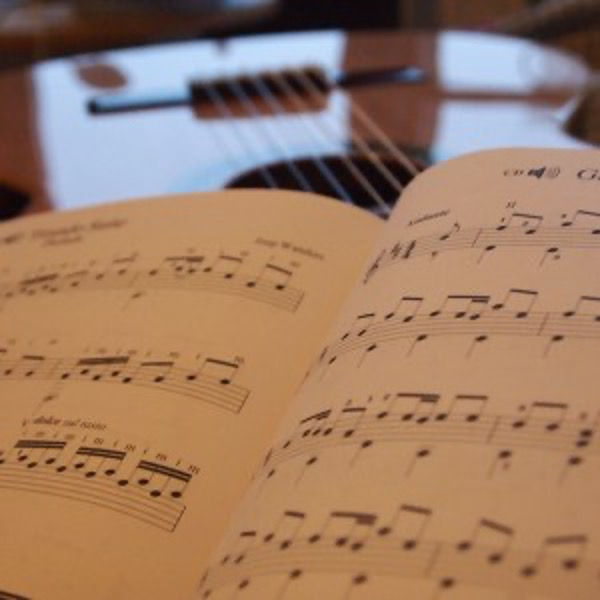
A secure understanding of music theory is fundamental because it can affect just about everything you do as a musician. For example, when you can quickly analyse a piece of music at sight – and understand crucial musical features such as the key and time signature etc. – it becomes much easier to learn to play. This is particularly important when it comes to sight reading, when there simply isn’t time to study the piece in detail, but you must be able to understand scale patterns and chord shapes immediately.
Knowledge of music theory also ensures that musicians always understand the music they play in context. The musical language of any piece reveals its style, immediately putting it into context, and therefore informing the performer’s interpretation.
Finally, a good understanding of music theory can help you to be more creative with music. Knowledge of the language of music is incredibly useful when it comes to both writing music, and notating compositions. For example, an understanding of how chords and keys are related can help you to compose with more creativity, and knowing how to notate different rhythms can be very helpful when trying to write your music down.
Ultimately, the study of music theory is a key part of a well-rounded music education, and not just a separate hurdle to be conquered. The exams provide structured syllabuses for studying music theory, and are therefore very useful educational tools.
To learn more about ABRSM’s music theory exams, visit the following link:


Comments